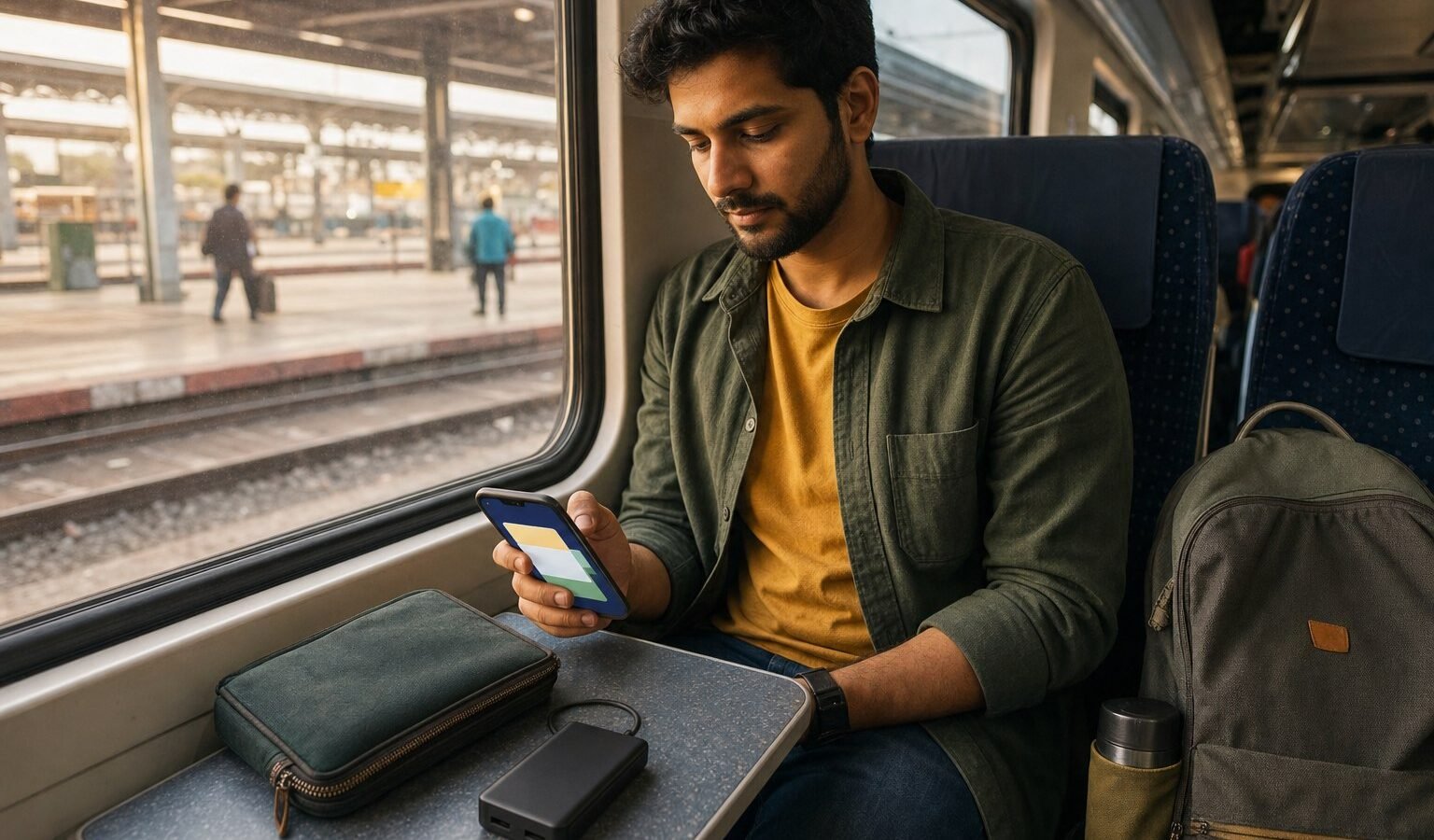
Travel concentrates identity documents, tickets, bookings, insurance information and payment access on one device at the moment it is most likely to be lost, borrowed or connected to unfamiliar networks. A safer plan keeps necessary information available without leaving unrestricted copies in every inbox, chat and download folder.
This guide is a practical decision framework for readers in India. Products, interfaces, prices, laws, policies and official procedures can change. Confirm time-sensitive details with the original provider or relevant authority before acting, especially when identity, health, money, rights or safety are involved.
A practical framework for digital document safety Indian travellers
Start by naming the exact job, the people affected and the consequence of failure. Work through the checkpoints in order, write down the evidence and prefer a reversible test over a large commitment. A polished interface or confident claim is not proof; the important question is whether the choice remains understandable, supportable and recoverable in the reader’s real environment.
Build a route-specific document list
Domestic flights, trains, hotels, rental vehicles and protected destinations can ask for different records. A route-specific list prevents both missing documents and unnecessary disclosure.
India context: Requirements can vary by operator, state, traveller age, permit area and current security or public-health guidance. This India-specific checkpoint belongs in the main decision because access, support, language and day-to-day conditions can change the safest practical choice.
Action to take
Confirm requirements on official operator or authority pages and list the original, digital or printed form accepted at each checkpoint. Record the result beside the decision so another person can understand what was checked and why it mattered.
Common mistake: Carrying every identity and financial document because one might be useful increases loss impact without improving the planned route. Treat a confident claim as a prompt to verify, not as proof by itself.
Create protected offline access
A booking or document stored only in email can become unavailable during poor connectivity, account lockout or a flat battery. Offline access should still remain protected by a device lock.
India context: Remote, mountain and monsoon routes in India can have intermittent power and mobile data even when the booking process was fully digital. Availability and usability are part of quality, so verify this detail before treating a broad recommendation as locally useful.
Action to take
Save essential files in a protected offline folder, carry a charging plan and give one trusted contact a limited emergency copy. Keep the evidence, date and responsible person together; memory becomes unreliable when several options look similar.
Common mistake: Saving everything as visible gallery screenshots makes documents easy to find for anyone who obtains the unlocked phone. Treat a confident claim as a prompt to verify, not as proof by itself.
Prefer verified digital documents over repeated scans
Issued and verifiable documents can reduce the need to circulate fresh photocopies. The receiving service must still accept the format and the traveller should open the official service independently.
India context: DigiLocker-issued documents have official status, while uploaded scans and screenshots may be treated differently by a verifier. A good answer makes the local constraint visible and shows which part of the decision needs fresh confirmation.
Action to take
Check the operator requirement, use the official app or website and share a document link or issued record only with the intended recipient. Use the result to remove unsuitable choices and define the smallest reversible next step.
Common mistake: A link received from an agent that imitates a document portal can steal account credentials even when the requested trip is real. Treat a confident claim as a prompt to verify, not as proof by itself.
Limit what hotels and agents receive
A booking intermediary may need enough information to complete a reservation, not an unrestricted archive of identity, insurance and payment records.
India context: Local properties and guides may use messaging apps for practical coordination, but the chat history can remain on several personal devices. This India-specific checkpoint belongs in the main decision because access, support, language and day-to-day conditions can change the safest practical choice.
Action to take
Ask which fields are required, add a purpose watermark to a copy when appropriate and confirm the official recipient before sending. Record the result beside the decision so another person can understand what was checked and why it mattered.
Common mistake: Posting a document in a large travel group so one organizer can download it gives every group member access. Treat a confident claim as a prompt to verify, not as proof by itself.
Keep sensitive uploads off unknown networks
Airports, stations and hotels create pressure to complete check-in immediately. An unknown hotspot adds avoidable risk to identity uploads and account recovery.
India context: Roaming, weak signal and delayed transport can make public Wi-Fi tempting at the exact moment a traveller is tired or rushed. Availability and usability are part of quality, so verify this detail before treating a broad recommendation as locally useful.
Action to take
Use trusted mobile data for high-consequence tasks, verify venue Wi-Fi with staff and postpone password or payment changes. Keep the evidence, date and responsible person together; memory becomes unreliable when several options look similar.
Common mistake: A captive portal displaying the venue logo is not proof that the network is operated by the venue. Treat a confident claim as a prompt to verify, not as proof by itself.
Close the travel data trail after return
Old boarding passes, visa copies, hotel forms and insurance files can remain in downloads, chats and shared folders long after their purpose ends.
India context: Frequent travellers can accumulate several versions of the same identity document across agents and devices. A good answer makes the local constraint visible and shows which part of the decision needs fresh confirmation.
Action to take
Revoke temporary links, remove unnecessary local copies, review account sessions and archive only the records needed for tax, claims or future reference. Use the result to remove unsuitable choices and define the smallest reversible next step.
Common mistake: Deleting one phone download does not remove copies sent by email, stored in cloud sync or retained lawfully by a service provider. Treat a confident claim as a prompt to verify, not as proof by itself.
A simple decision scorecard
| Checkpoint | Question | Evidence to keep |
|---|---|---|
| Purpose | What exact job must this choice complete? | A one-sentence requirement and a real test. |
| Access | Who or what receives permission? | A current account, device and permission list. |
| Trust | Which important claims can be verified? | Dated primary documents or official guidance. |
| Failure | What happens when the service, device or account fails? | A tested fallback and named recovery owner. |
| Exit | Can data, access and payment be removed cleanly? | Export, revocation, deletion and support steps. |
A scorecard does not replace judgement. It makes assumptions visible and gives a family, student, traveller or small team a shared record. If two options are close, prefer the one that is easier to test, understand, maintain and leave. Reversibility has real value when technology and guidance change.
Official sources and further reading
The practical guidance above is grounded in these primary or official sources. Open the current version before making a high-consequence decision because policies, interfaces and enforcement timelines can change.
Frequently asked questions
Should every travel document be stored in the phone gallery?
No. Keep only necessary offline copies in a protected location and avoid unrestricted gallery storage for sensitive identity or financial files.
Are DigiLocker documents accepted everywhere?
Issued documents have official validity, but the exact operator, foreign authority or private service may specify its own accepted format. Confirm before travel.
Is adding a watermark to an ID copy useful?
A purpose and date watermark can reduce casual reuse when a copy is appropriate, but it does not replace recipient verification or secure transmission.
What should be done first after losing a travel phone?
Use the prepared remote-lock or erase process, contact the mobile provider, secure important accounts and follow the appropriate local reporting and travel-support steps.
The Ucatru view
Digital trust is a repeatable habit: verify the source, grant the minimum access, keep important evidence and know the recovery path before trouble starts. The most useful choice is not the one with the longest feature list. It is the one whose purpose is clear, whose risks are visible and whose failure can be contained without unnecessary harm.
Editorial note: This article provides general educational information for readers in India. It does not provide medical, legal, financial or other individual professional advice. Where a decision affects health, safety, rights or substantial money, consult an appropriately qualified professional and the latest official information.