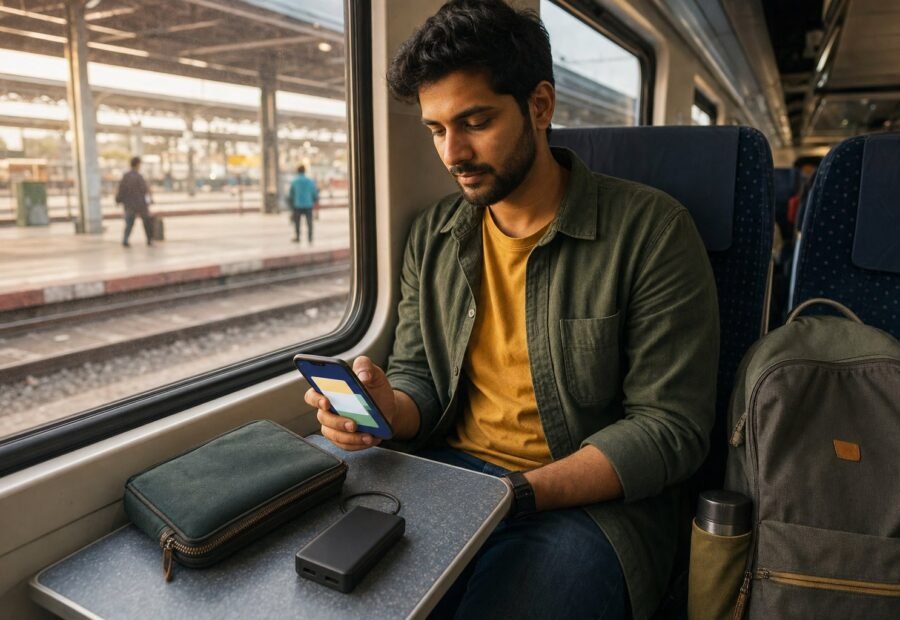
Free or convenient Wi-Fi can keep a trip, class or workday moving, but a network name alone does not prove who operates it. Attackers can imitate a familiar hotspot, shared networks can expose poorly configured devices and an automatic reconnection can happen long after the user forgot the network. Public Wi-Fi safety is therefore a sequence of small checks, not a single security app.
This guide is a practical decision framework for readers in India. Products, interfaces, prices, laws, policies and official procedures can change. Confirm time-sensitive details with the original provider or relevant authority before acting, especially when identity, health, money, rights or safety are involved.
A practical framework for public Wi-Fi safety India
Start by naming the exact job, the people affected and the consequence of failure. Work through the checkpoints in order, write down the evidence and prefer a reversible test over a large commitment. A polished interface or confident claim is not proof; the important question is whether the choice remains understandable, supportable and recoverable in the reader’s real environment.
Confirm the network before joining
A fraudulent hotspot can copy the name of an airport, hotel or cafe and still provide internet access, making it appear legitimate. The decisive detail is the network information confirmed by the venue.
India context: Names may be similar across terminals, hotel wings, campuses and transport hubs, and captive portals can change without warning. This India-specific checkpoint belongs in the main decision because access, support, language and day-to-day conditions can change the safest practical choice.
Action to take
Ask staff for the exact network name and sign-in process, then compare the spelling and security type before connecting. Record the result beside the decision so another person can understand what was checked and why it mattered.
Common mistake: Choosing the strongest signal or the first network containing the venue name is not reliable verification. Treat a confident claim as a prompt to verify, not as proof by itself.
Move sensitive tasks to a trusted connection
Banking, password changes, identity-document uploads and high-value purchases have more serious consequences than reading public information. Postpone them or use a trusted mobile connection when practical.
India context: Mobile data quality and roaming cost vary across India, so the fallback should be planned before an urgent payment or booking is due. Availability and usability are part of quality, so verify this detail before treating a broad recommendation as locally useful.
Action to take
List the tasks that must not use an unknown network and complete them before departure or through a trusted hotspot you control. Keep the evidence, date and responsible person together; memory becomes unreliable when several options look similar.
Common mistake: A padlock icon helps confirm an encrypted website connection but does not prove that every app, extension or network service is safe. Treat a confident claim as a prompt to verify, not as proof by itself.
Harden the device before travel or study
Updates, a screen lock, an active firewall and disabled file sharing reduce the ways another network participant can reach the device. These controls should be set before the user is under time pressure.
India context: Students and travellers may use older Android phones or shared Windows laptops, where default sharing and update status deserve an explicit check. A good answer makes the local constraint visible and shows which part of the decision needs fresh confirmation.
Action to take
Install pending security updates, set the network profile to public, disable discovery and confirm that nearby sharing is off. Use the result to remove unsuitable choices and define the smallest reversible next step.
Common mistake: Waiting for a warning banner after joining assumes the operating system will recognize every risk correctly. Treat a confident claim as a prompt to verify, not as proof by itself.
Use VPN and multifactor controls with realistic expectations
A reputable VPN can encrypt traffic between the device and the VPN service, while multifactor authentication reduces the value of a stolen password. Neither control makes phishing or an infected device harmless.
India context: VPN performance can vary on congested Indian networks, and free services may have unclear data practices or intrusive advertising. This India-specific checkpoint belongs in the main decision because access, support, language and day-to-day conditions can change the safest practical choice.
Action to take
Choose a provider only after reviewing ownership, privacy terms, update history and exit options, then test it before relying on it. Record the result beside the decision so another person can understand what was checked and why it mattered.
Common mistake: Installing an unknown free VPN at the last minute can exchange one network risk for a new data-collection risk. Treat a confident claim as a prompt to verify, not as proof by itself.
Control automatic connections and radios
Saved networks can cause a phone or laptop to reconnect without a deliberate choice. Bluetooth and nearby-sharing features can also remain active after their immediate purpose ends.
India context: Common network names appear across chains, railway stations and public venues, increasing the chance of an unintended match. Availability and usability are part of quality, so verify this detail before treating a broad recommendation as locally useful.
Action to take
Disable automatic connection for public networks, forget them after use and turn off unused Wi-Fi or Bluetooth radios. Keep the evidence, date and responsible person together; memory becomes unreliable when several options look similar.
Common mistake: Leaving every remembered hotspot active prioritizes convenience over awareness of the connection currently carrying traffic. Treat a confident claim as a prompt to verify, not as proof by itself.
Clean up and review activity afterwards
The session is not finished when the browser closes. Sign-outs, download cleanup, notification review and account alerts can reveal or reduce later exposure.
India context: Booking PDFs, identity scans and work files may remain in download folders that are automatically synced to other devices. A good answer makes the local constraint visible and shows which part of the decision needs fresh confirmation.
Action to take
Sign out of sensitive services, remove temporary files, forget the network and review important account alerts after the session. Use the result to remove unsuitable choices and define the smallest reversible next step.
Common mistake: Changing every password without evidence may create confusion; prioritize accounts actually used or exposed during a suspicious connection. Treat a confident claim as a prompt to verify, not as proof by itself.
A simple decision scorecard
| Checkpoint | Question | Evidence to keep |
|---|---|---|
| Purpose | What exact job must this choice complete? | A one-sentence requirement and a real test. |
| Access | Who or what receives permission? | A current account, device and permission list. |
| Trust | Which important claims can be verified? | Dated primary documents or official guidance. |
| Failure | What happens when the service, device or account fails? | A tested fallback and named recovery owner. |
| Exit | Can data, access and payment be removed cleanly? | Export, revocation, deletion and support steps. |
A scorecard does not replace judgement. It makes assumptions visible and gives a family, student, traveller or small team a shared record. If two options are close, prefer the one that is easier to test, understand, maintain and leave. Reversibility has real value when technology and guidance change.
Official sources and further reading
The practical guidance above is grounded in these primary or official sources. Open the current version before making a high-consequence decision because policies, interfaces and enforcement timelines can change.
Frequently asked questions
Is hotel Wi-Fi always safe because it needs a room number?
No. A login step can reduce casual access but does not verify every network device or protect a user from a copied hotspot name and phishing page.
Does HTTPS make public Wi-Fi completely safe?
HTTPS protects the connection to a correctly identified website, but users can still visit a fake domain, approve a malicious download or expose traffic from poorly designed software.
Should I use banking apps on public Wi-Fi?
Prefer a trusted mobile connection or wait. If there is no practical alternative, verify the network, keep the device updated and avoid acting on links received during the session.
What should I do if the captive portal asks for unusual permissions?
Disconnect and confirm the expected process with the venue. A basic hotspot should not require unrelated device administration, accessibility or screen-sharing access.
The Ucatru view
Digital trust is a repeatable habit: verify the source, grant the minimum access, keep important evidence and know the recovery path before trouble starts. The most useful choice is not the one with the longest feature list. It is the one whose purpose is clear, whose risks are visible and whose failure can be contained without unnecessary harm.
Editorial note: This article provides general educational information for readers in India. It does not provide medical, legal, financial or other individual professional advice. Where a decision affects health, safety, rights or substantial money, consult an appropriately qualified professional and the latest official information.